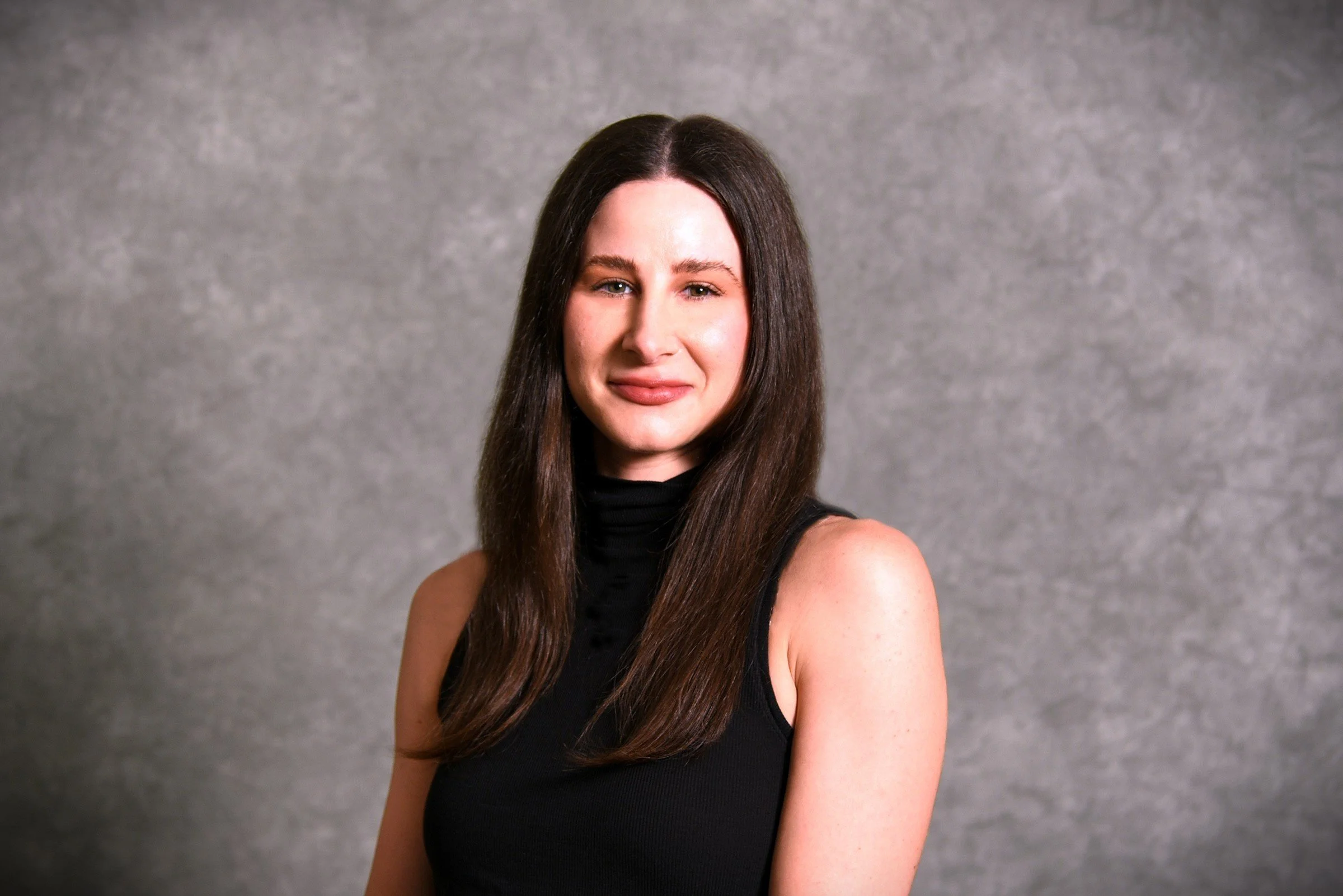
About Nicole K. Gause, PhD, LP-HSP
-
I am a licensed clinical psychologist with doctoral-level credentials from APA-accredited programs at the University of Cincinnati and the University of Virginia. My clinical foundation spans more than a decade of experience across private practice, university counseling centers, community mental health, hospital-based settings, and postdoctoral residency.
My doctoral research at the University of Cincinnati focused on the interplay between early experience, attachment, and behavioral health outcomes, with peer-reviewed publications in the Journal of Behavioral Medicine, Prevention Science, and the Journal of Health Psychology.
Ph.D. in Clinical Psychology (APA-Accredited), University of Cincinnati
Pre-Doctoral Internship in Health Services Psychology (APA-Accredited), University of Virginia Counseling and Psychological Services
Postdoctoral Residency, Duquesne University Counseling & Wellbeing Center
M.A. in Psychology in Education, Teachers College, Columbia University
B.A. in Psychology, Boston University
-
Trauma and complex trauma (C-PTSD) are a primary clinical specialty of mine. I hold advanced certifications in trauma-informed care, including Somatic Therapy for Complex Trauma Certification—integrating various neurobiological frameworks for mind-body healing—and Complex Trauma Certification Levels 1 and 2 (CCTP/CCTP-II) with Janina Fisher, one of the foremost clinical authorities on complex trauma treatment.
My training spans both theoretical and somatic modalities. Theoretically, my work is grounded in cognitive frameworks, the examination of belief structures, and emotional processing, integrated with Jungian and depth psychological approaches—orientations that address how a person makes meaning of their experience and how that meaning shapes their internal and relational life. A central thread of this work is bringing unconscious material into conscious awareness and applying restructuring and reprogramming techniques to address the belief systems and emotional patterns that trauma leaves behind. This is further integrated with body-based and nervous system-oriented approaches that address how trauma is held and expressed physiologically.
Over more than a decade of clinical practice, I have worked with hundreds of people navigating relational and developmental trauma—many of whom arrived in therapy presenting with anxiety, depression, or relationship patterns that weren't working, without yet recognizing that complex trauma was at the center of it. That gap between presenting concern and underlying cause is something I am trained to identify and work with directly.
Treatment targets include:
Subconscious Programs & Belief Structures: Identifying and working with limiting belief structures rooted in early experience, including the programs that drive emotional reactivity and self-perception.
Conscious Integration: Bringing unconscious material into awareness and restructuring the interpretations that trauma leaves behind.
Emotional Attunement: Developing the ability to recognize, tolerate, and learn from emotional experience rather than being governed by it.
Nervous System Regulation: Building somatic awareness of triggers, fear responses, and states of physiological activation.
Attachment & Relational Wounds: Addressing the downstream effects of early trauma on adult relationships, self-worth, and the capacity for connection.
Dismantling Self-Protective Patterns: Moving past avoidance, self-sabotage, and defense mechanisms that were once adaptive but are now limiting.
Identity Formation: Building a more stable, differentiated, and expansive sense of self.
Treating trauma that is relational in origin, cumulative in nature, and woven into a person's sense of self requires an integration of multiple clinical frameworks—not a single modality. That integration is the foundation of how I work.
-
Performance psychology is my second area of expertise. I hold advanced training in performance optimization and have spent years working clinically with high-functioning adults—doctors, lawyers, entrepreneurs, and executive leaders—helping them navigate burnout, chronic stress, and performance plateaus, and developing the skills that sustained excellence requires: effective communication and negotiation, creative thinking and flow state, deep and efficient focus, time management, and executive leadership.
Many high-performers I work with are functioning well by most external measures. They come to this work because they sense untapped capacity: deeper reserves of creativity and strategic thinking, greater range and effectiveness as leaders, and more consistent access to their best rather than peaks that depend on circumstance. Others arrive at an inflection point—burnout, a pattern that keeps repeating around authority or delegation or conflict, or a growing sense that the strategies that fueled early success are now creating rigidity or internal depletion.
In both cases, the work is the same at its core: identifying the psychological programs running beneath performance, understanding where they came from, and deliberately building architecture that supports sustained excellence rather than grinding through on willpower alone. This is combined with evidence-based approaches for psychological and performance optimization.
Performance targets include:
Burnout Recovery & Prevention: Identifying the underlying drivers, not just managing the symptoms.
Stress Management & Sustainable Pacing: Navigating high-demand professional environments.
Performance Under Pressure: Developing the nervous system regulation and cognitive flexibility that high-stakes situations require.
Effective Leadership: Drawing on social and leadership psychology to expand range, reduce rigidity, and lead from an integrated place.
Executive Functioning & Organizational Effectiveness: Decision-making under uncertainty, delegation, and managing complexity at scale.
Communication & Negotiation: Developing the precision, presence, and strategic awareness that high-stakes interactions demand.
Focus, Concentration, & Flow: Understanding the internal conditions that allow peak performance and deep work to emerge consistently.
This work incorporates organizational and leadership psychology—examining how unconscious patterns shape decision-making, presence under pressure, the capacity to delegate, and the ability to lead from a grounded and integrated place. The goal is not only internal shift but measurable external impact.
-
Why I Founded Silvering Psychological
I founded Silvering Psychological because the work I wanted to do required a different kind of container—one built for depth, not symptom management. I wanted to practice at the level where change actually happens: not at the surface of symptoms, but in the belief structures, somatic patterns, and relational history that generate them.
The name comes from the process by which clear glass becomes a mirror: something is applied to the surface that allows it to reflect with precision. That is what I believe therapy, done well, can do. It is not about repair. It is about resolution, clarity, and the capacity to finally see yourself accurately—and from that vantage point, to make real choices about how to live.
I built this practice to operate without the constraints that prevent that kind of work from happening. Silvering Psychological is telehealth-only, licensed in Massachusetts and Pennsylvania, and operates outside of insurance networks so that the work can be conducted on its own terms: depth-oriented, unhurried, and built around what the person actually needs rather than what a diagnosis code will reimburse.
Learn more about why I’ve opted out of the insurance model [here, in the Codex blog]
What Symptoms Don't Tell You
What I understood early in my clinical training is that the presenting symptoms are almost never the whole story. Beneath the anxiety, the shutdown, the relentless drive, or the chronic dissatisfaction, there is nearly always a belief structure—a set of programs written in early life, in the body, in relationship—that is running the show from below conscious awareness.
These programs were adaptive once. They organized safety, connection, and survival in environments that required them. But they persist long after those environments are gone, and they distort the lens through which we see ourselves, others, and what is possible.
That distortion is not a character flaw. It is a calibration problem.
My clinical work is grounded in the science of complex trauma, nervous system dysregulation, and the role of early relational experience in shaping how we interpret—and misinterpret—the present. I work with the origin stories that generated our most limiting belief structures, not to excavate the past for its own sake, but because those stories are still active. They are the filter through which current events are given meaning. Changing the filter changes what is possible.
The Intersection of Trauma & Excellence
My work spans trauma resolution and the cultivation of excellence. These are not separate paths—both require a foundation of regulation and the capacity to meet challenges without collapse. Whether you are navigating the echoes of early experiences or optimizing your performance in a high-stakes field, my role is to provide the attuned, discerning mirror necessary for transformation.
Beyond the clinical frameworks of trauma and performance, my work is about the human capacity for real, enduring change. I partner with individuals ready to move from insight into action.
-
An Intentional Partnership
Our work will be engaged and intentional. It will challenge both of us—myself to remain deeply attuned and discerning, and you to examine patterns honestly and commit to change meaningfully. Growth requires effort, and I do not shy away from that effort, nor do I shy away from holding my clients to it.
You can expect sharp awareness, highly developed clinical judgment, and interventions that are deliberate. I pay close attention—to language, physiology, pacing, and the subtleties beneath what is spoken. I also bring humor and humanity into the room. Insight does not require severity. Often, clarity emerges more easily when we can hold complexity with composure—and occasionally, levity.
Personal Alignment
I am deeply invested in this work. I care about outcomes. I care about coherence. And I care about helping you build a life that reflects who you are becoming, not merely who you adapted to be.
I do not position myself above the work. I move within it—alongside my clients. The disciplines of awareness, regulation, and refinement that I invite them into are disciplines I practice myself.
Outside the therapy room, I am an avid reader and lifelong student of psychology, history, sociology, and the intersection of science, spirituality, and mysticism. I value physical wellness, time in nature, and practices that support nervous system health and embodied resilience. I embrace joy in the many forms in which it is available to be indulged. My professional and personal commitments are aligned around the same principle: refinement through awareness and aligned action.
Check out [How to Prepare for Therapy] for more insight on what working with me would be like.
Silvering Psychological is a psychotherapy practice founded by Dr. Nicole Gause, a licensed clinical psychologist providing telehealth therapy in Massachusetts and Pennsylvania.